
We combine seven years of proprietary experimental data, curated scientific evidence, Optilox Alpha and Vectranox™ to build the controlled biological datasets that AI and drug-development models need next. Vectranox is our highly tunable, non-viral, non-lipid delivery platform — giving us a practical experimental engine for rapid design → formulation → test → learn cycles, without rebuilding the delivery system until your model says it needs to.
Vectranox has produced reporter expression in differentiated airway models, primary cells and mouse lung following local airway administration. That experimental foundation is what makes the data-generation proposition credible.
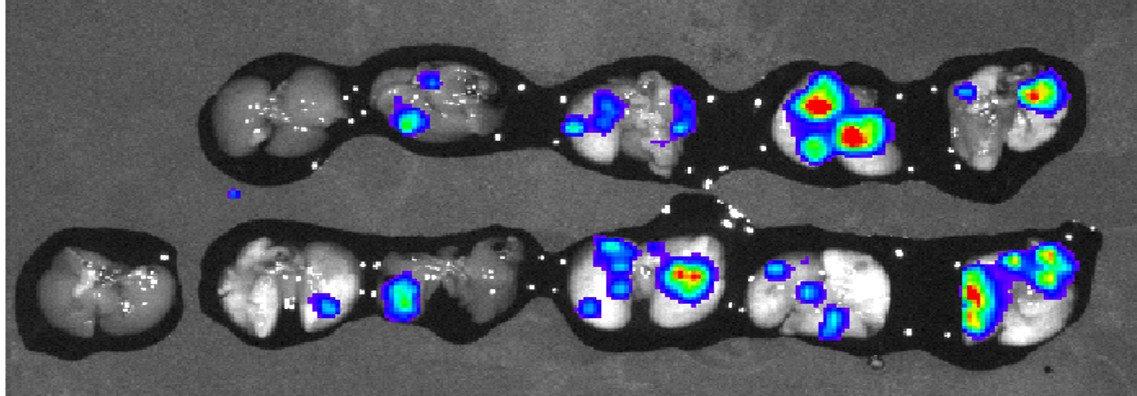
Vectranox particles carrying luciferase pDNA were administered by oropharyngeal instillation. Excised lungs were imaged 48 hours later. The vehicle control and particle-without-luciferase control were dark; four earlier-generation peptide formulations produced signal across the lung tissue.
Tell us the biological question or dataset you need. We use our accumulated experimental evidence to define the test, Optilox Alpha to design the Vectranox nanoparticle, and the tunable platform to test, learn and iterate. The platform has been developed across demanding delivery settings including differentiated airway models, mucus-facing systems, physiological media and in vivo delivery.
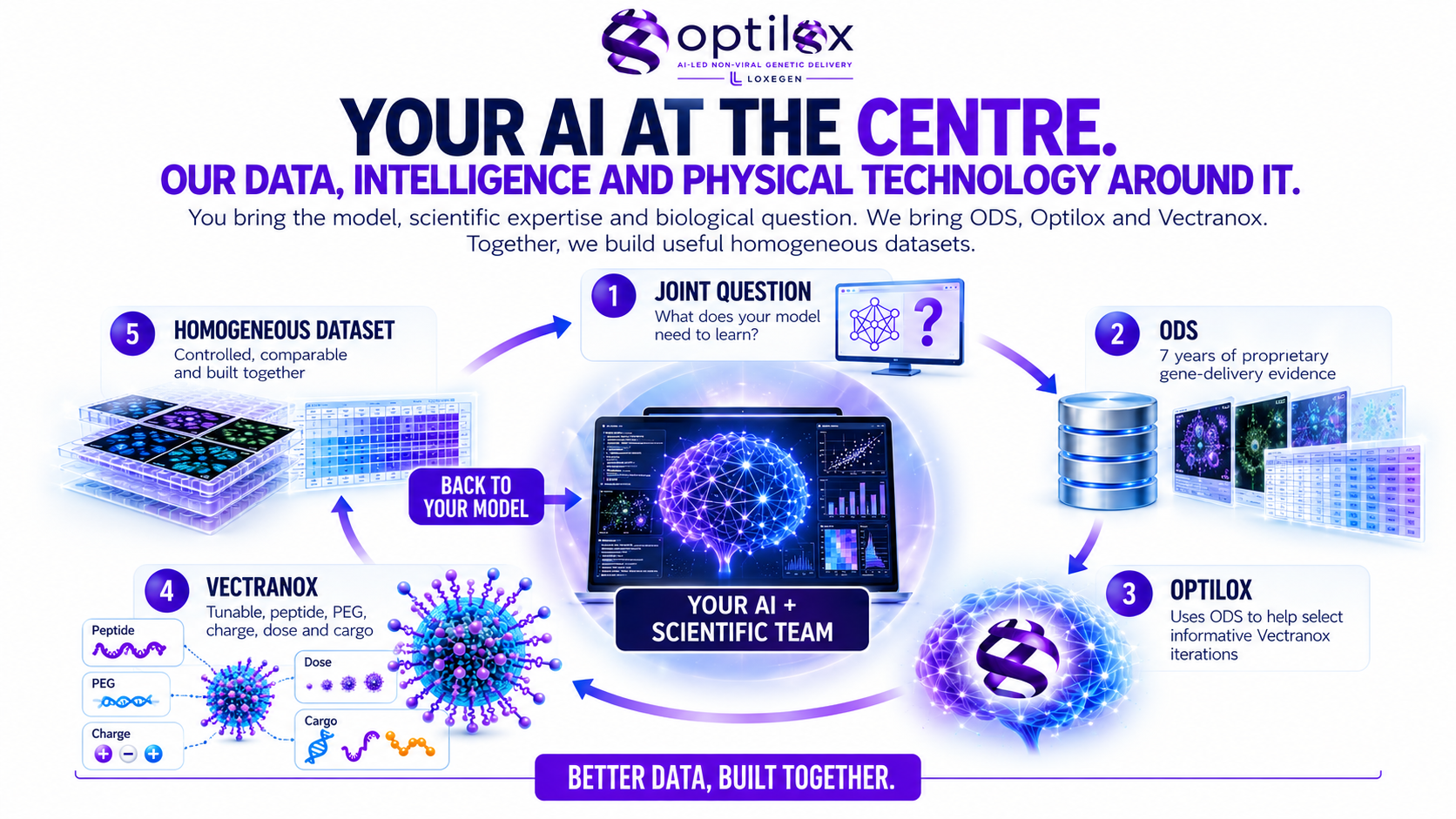
Tell us the target, payload, biological environment or outcome you need to understand — from primary and differentiated models to mucus-facing systems, organoids and in vivo studies.
Alpha combines Loxegen's structured experimental history with curated scientific evidence to prioritise the Vectranox formulation to test next.
The result is experimental evidence designed around the question: positive and negative outcomes, physicochemical context and biological readouts that can inform your model and the next experiment.
We design and supply Vectranox nanoparticles for your application, ready for you to test in your own experimental system.
We design the experimental programme, arrange the appropriate assays and deliver the resulting structured dataset for your biological or computational model.
Current delivery evidence: pDNA and mRNA. Peptide/protein delivery is a prospective capability to be validated experimentally.
Optilox Alpha is Loxegen's predictive nanoparticle-design model. It combines our proprietary structured experimental history with curated scientific evidence to help select which Vectranox formulation should be tested next — and why.
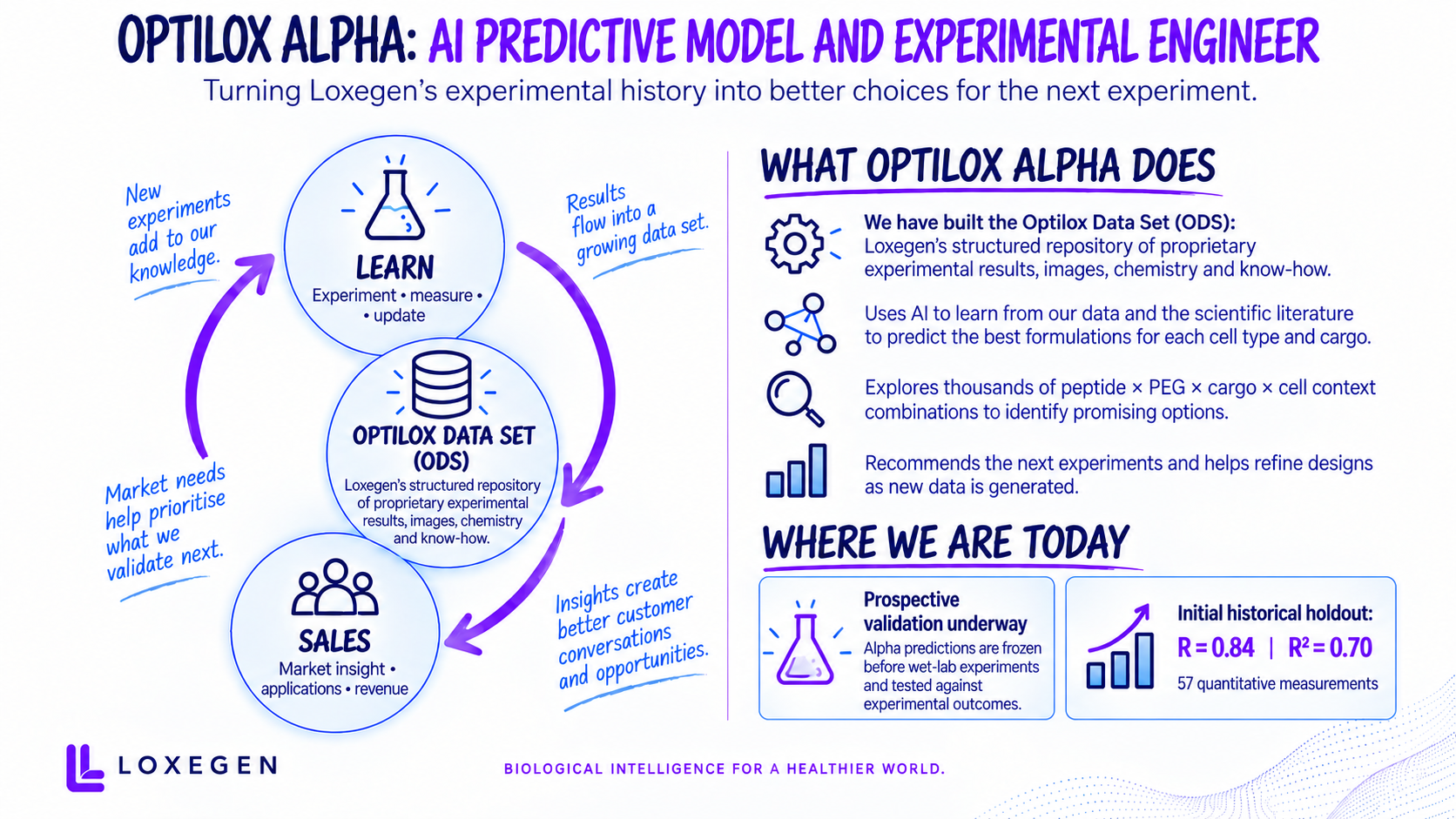
Alpha is in prospective validation. Recommendations are research-use formulation hypotheses to be tested experimentally, not guaranteed outcomes.
As translational research moves into more physiologically relevant models, the delivery step becomes the limiting factor. When an experiment fails, it is often impossible to tell whether the construct was wrong or the delivery method simply never got it into the cell.
Lipid reagents are optimised for easy, dividing cell lines. In primary cells, differentiated epithelium and 3D culture, efficiency drops sharply and toxicity rises.
Titre production, biosafety approvals, integration risk and cost — significant burdens when the question is simply whether a construct works.
Poor delivery is misread as a failed construct or an unusable model, and promising programmes are abandoned for the wrong reason.
Vectranox combines a unique branched peptide nanoparticle architecture with zinc-coordinated PEG. The peptide condenses nucleic-acid cargo into compact particles, while PEG architecture is an active design variable in how the particle behaves in biological environments and enters cells.
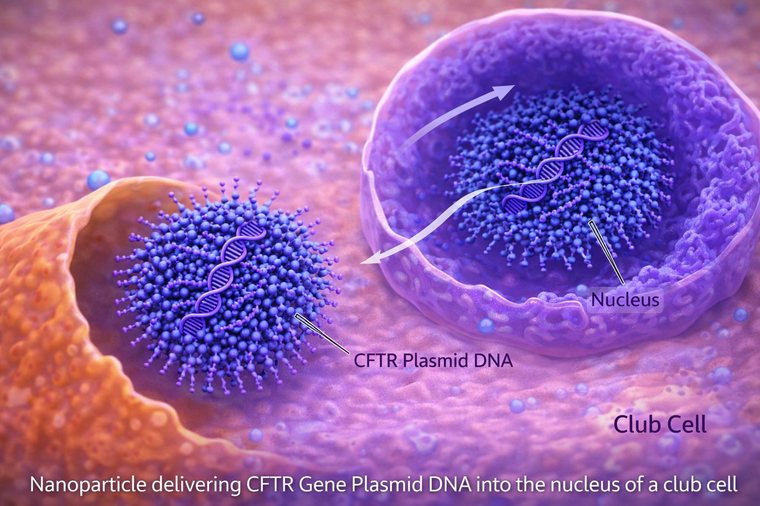
Vectranox's branched peptide architecture self-assembles with nucleic-acid cargo to form a compact nanoparticle.
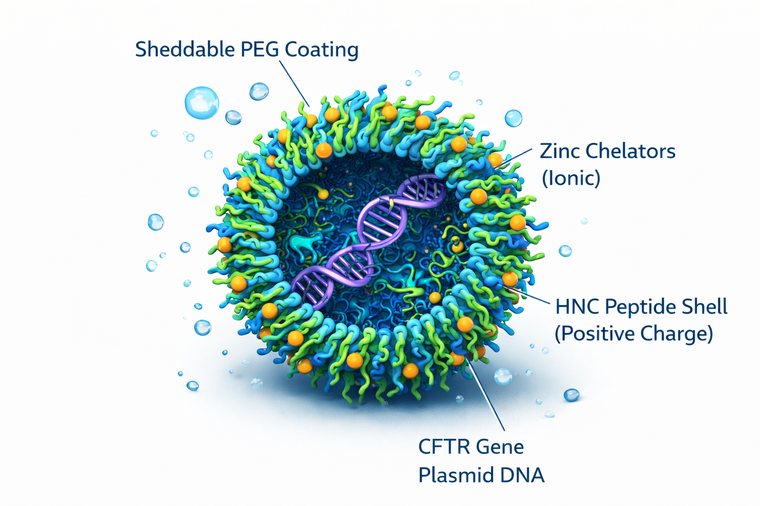
Uptake studies indicate a non-canonical, PEG-guided cellular entry pathway. PEG architecture is therefore a functional design variable, not simply a passive coating.
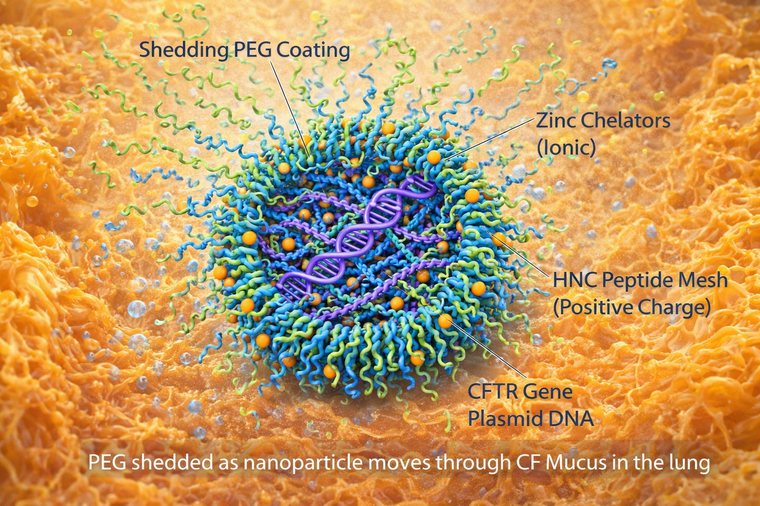
Peptide and PEG architecture can be tuned for the payload, cell type and biological environment, creating a practical formulation space for iterative testing.
The peptide builds the particle. PEG helps determine how it enters the cell. Both are tunable.
Vectranox has been developed through multiple generations of structure–activity relationship optimisation. Its modular peptide and PEG architecture creates a formulation space that can be iterated as new biological questions, payloads and environments are tested.

Supplied as pre-formed particles — not a self-assembly kit. No formulation step, no handling variability, no cold chain. Add to your cells and read out.
Lead peptide for plasmid DNA. Validated in primary airway epithelium at air–liquid interface and in vivo.
Alternative peptide architecture with a distinct performance profile across cell types. Works with mRNA as well as plasmid DNA.
Vectranox is validated in primary cells and differentiated airway epithelium. We now want to push it into systems we have not yet tested — MSCs, iPSC-derived immune cells, organoids, organ-on-chip. If transfection is a genuine problem in your model, we will supply pre-formulated GFP particles free of charge. You run the assay. We both learn something — including if it does not work.
Vectranox has been tested in differentiated airway epithelium at air–liquid interface, iPSC-derived cultures, primary cells and in vivo airway delivery. These studies provide positive and negative results across expression, persistence, cell health, barrier integrity and particle behaviour.
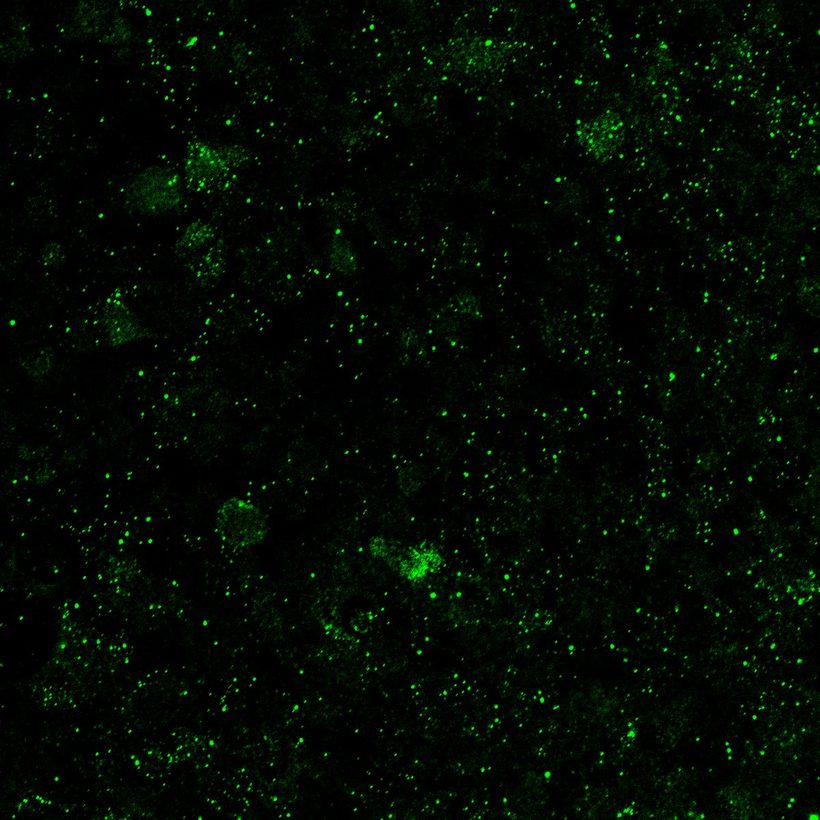
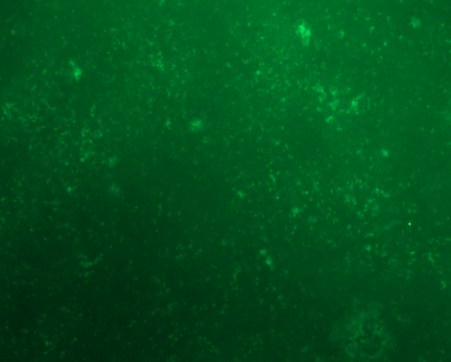
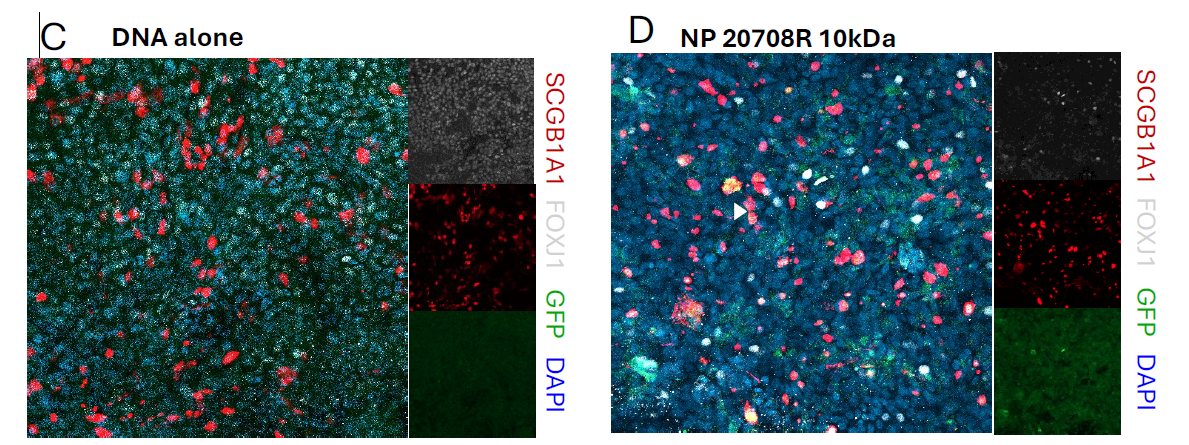
GFP expression in fully differentiated air–liquid interface airway models transfected with
Vectranox. In the same tested models, the lipid-reagent comparator produced
no detectable expression.
Imaged at 100 µg/mL.
Confocal imaging of fully differentiated airway epithelium after transfection with Vectranox. GFP expression is resolved within the intact tissue architecture: club cells (SCGB) express the cargo, ciliated cells (FOXJ1) are identified alongside them, and tight junctions (ZO-1) remain continuous — the barrier is not disrupted by delivery.
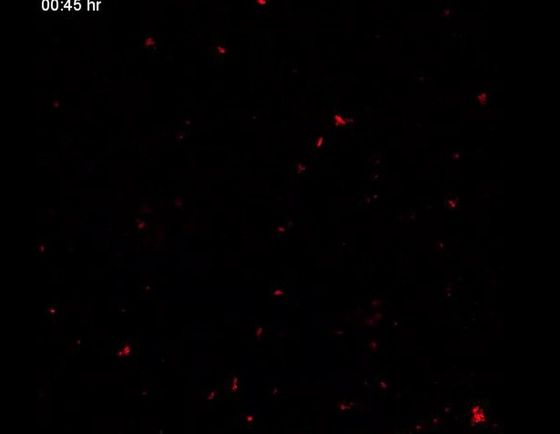
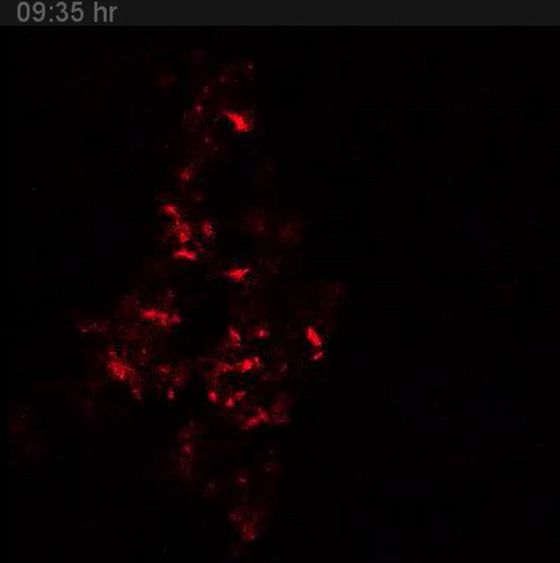
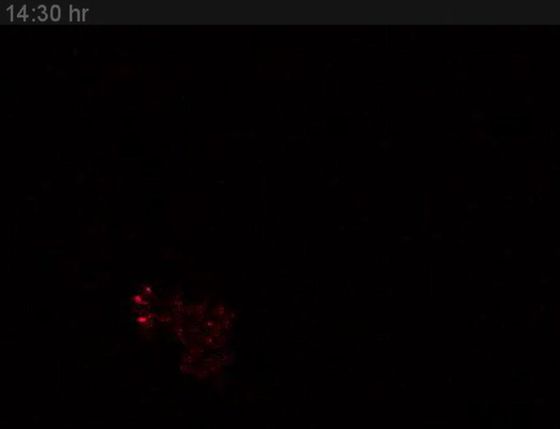
Live imaging of Vectranox particles applied to fully differentiated iPSC air–liquid interface epithelium, tracked over fifteen hours.
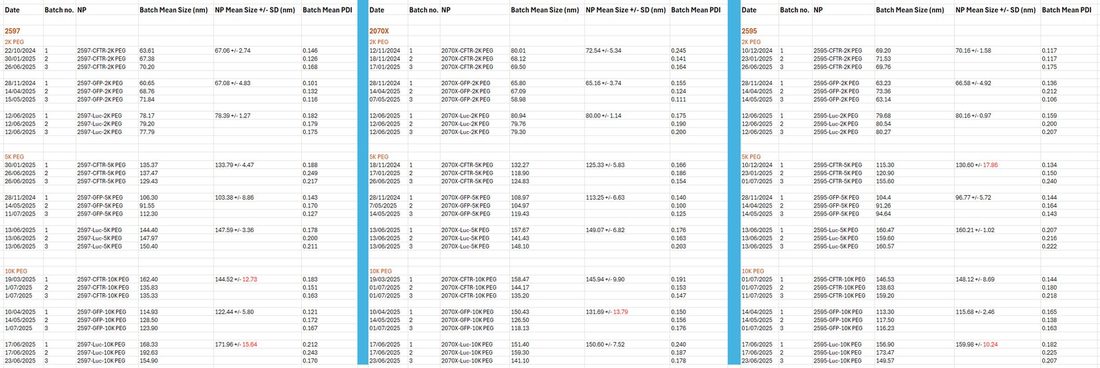
Particle size and polydispersity across independently prepared batches. Manufacturing consistency without automated formulation equipment.
A differentiated ALI culture takes weeks to grow and is the most valuable thing on the bench. A reagent that transfects it but wrecks it has solved nothing.
Because Vectranox is non-viral and non-integrating, there is no anti-vector immunity and no integration burden to accumulate. You can dose the same culture — or the same animal — again.
More cargo delivered means more expression. Published images are frequently generated at conservative doses — what you see is rarely the ceiling.
Repeat-dose studies, run independently at UNSW in primary airway cells, show markedly improved transfection over a single dose.
Dose number and timing can be varied deliberately and measured alongside expression and cell health, giving models a clearer picture of what changed.
Results have been reproduced across academic, clinical and commercial laboratories, in multiple biological systems and experimental workflows:
Development of the inhaled platform is supported by Australia's Medical Research Future Fund (MRFF), in partnership with the University of Queensland and the Murdoch Children's Research Institute.
Patent: AU 2019320847, Nanoparticles for transfection — accepted 16 April 2026; grant pending expiry of the opposition period. Priority date 14 August 2018. Inventors: A. Venables, D. E. Levy.




Vectranox is supplied pre-formulated and ready to dose, with starting protocols for submerged and ALI cultures that can be optimised for the model.
Directions for use of ready-to-dose particles, including storage, dosing, controls and readout.
View protocol →Read the peer-reviewed work behind the Vectranox platform and its development.
View publication →Tell us about your model and what you are trying to deliver. We will come back to you directly — typically within two working days.